

FLY FISHING INFO

Filters

Clear all

Categories

by Beau Robinson

Best Streamer Flies for Fall Trout & Smallmouth — Natives Fly Fishing Guide

Fall is the best time of year to throw streamers. Water temperatures drop into that magic 50–60°F window, big trout and smallmouth start stacking up in deeper runs and pools, and aggressive predatory feeding kicks in before winter. If you've been throwing dries all summer, it's time to pick up a heavier rod, tie on something with movement, and fish the banks.This guide covers the streamer patterns we trust most for fall trout and smallmouth — the flies that have earned their place in the box through time on the water.Why Fall Streamers WorkAs water cools, forage fish like sculpins, crayfish, and juvenile baitfish become a primary food source for large trout and smallmouth. Big fish are actively feeding up before winter and are less selective than during a hatch — they want profile, movement, and something worth eating. A well-swung or stripped streamer triggers reaction strikes from fish that wouldn't look twice at a size 18 dry.Top Fall Streamer Patterns1. Chocklett's Game ChangerBlane Chocklett's Game Changer is the benchmark for articulated streamer design. The multi-shank construction creates a fluid, swimming motion that mimics a wounded baitfish better than almost anything else in the water. Fish it on a 6–8wt with a sink-tip line on a slow, erratic strip — let it breathe between pulls. Available in multiple sizes and colorways for trout and trophy smallmouth.2. Woolly BuggerNo streamer list is complete without it. The Woolly Bugger has been fooling trout for decades and for good reason — the marabou tail pulses with every twitch and the hackle breathes in the current. Fish it on a swung presentation for steelhead-style takes, or strip it aggressively along undercut banks for fall browns.3. Articulated Sculpin PatternsSculpins are a staple in the diet of large river trout, especially in freestone streams. A weighted, articulated sculpin pattern fished tight to the bottom on a dead drift or with short strips triggers some of the most violent takes you'll experience on a fly rod. Look for dark, natural colorways — olive, brown, rust.4. Predator Series StreamersLarger profile flies built for big fish situations. When you're targeting trophy browns or fall-run smallmouth in deep pools and long runs, you want something with enough mass to get down and enough movement to demand attention. Size up your leader and don't be afraid to slow down the retrieve.5. Dragon Tail & Bucktail PatternsSynthetic and natural materials like Dragon Tail and whitetail bucktail give streamers a lifelike shimmer and undulation that can be the difference on pressured water. These materials breathe in still water between strips, making even a paused fly look alive.How to Fish Fall Streamers Rod: 6–8wt depending on fly size and target species Line: Sink-tip or full sinking line for deep runs; floating line with weighted flies for shallow water Leader: Short and stout — 3–5 feet of 10–16lb fluorocarbon Retrieve: Vary it. Start with long, slow strips with pauses, then experiment with short erratic strips. Most strikes come on the pause or direction change. Water: Target seams, deep pools, undercut banks, and transitions from fast to slow water. Fall fish stack in predictable spots — find the structure, find the fish. Gear Up for FallThe flies above are all available in our Flies collection, and many are part of our Chocklett collaboration — patterns tied with the same materials and specs Blane uses himself. Pair them with a quality fly line and landing net built for big fish, and you're ready for the best fishing of the year.Good luck out there. The fall bite doesn't last forever.
Read more

by Beau Robinson

How to Choose a Fly Fishing Net: Creek, Boat & Guide Nets Explained

Landing nets aren't one-size-fits-all. The right net depends on where you fish, what you're targeting, and how you like to move on the water. Buy too small and you're wrestling a trophy brown into a basketball hoop. Buy too big and you're hauling dead weight through tight streamside brush all day. Here's how to match the net to the water. Backcountry & Small Stream Nets Small nets are built for small water — tight corridors, overgrown banks, and fish in the 8–14 inch range. A compact hoop (10–12 inches) and short handle keep things maneuverable when you're stepping over logs and ducking under branches. Look for lightweight rubber mesh that protects fish slime and fins without snagging hooks on the release. Best for: Appalachian brook trout, small limestone creeks, technical spring creeks, panfish Creek & Boat Nets Mid-size river nets are the workhorse of most fly anglers' kits. A 14–18 inch hoop handles most trout up to trophy size, and a medium-length handle gives you the reach to net fish without pulling them out of the current and stressing them. Rubber mesh is non-negotiable here — knotted mesh damages the protective slime coat and delays recovery on catch-and-release fish. Best for: Tailwaters, freestone rivers, trout in the 12–22 inch range, wading anglers Guide & Trophy Nets When you're chasing big fish — trophy browns, steelhead, salmon, or large smallmouth — you need a net that can actually contain them. Guide nets run 20–26 inch hoops with deep bags and longer handles, often designed for reach from a drift boat or to handle fish that simply won't fit in a standard net. The Catch Cam Predator Series lives here. Best for: Trophy trout, steelhead, salmon, guide boats, big river fishing What to Look for in Any Net Rubber mesh — protects fish, doesn't snag hooks, dries faster than nylon Weight — lighter is better for all-day wading; heavier is acceptable on a boat Frame material — wood is classic and durable; carbon and aluminum are lighter Handle length — longer reach for bigger fish and boat use; shorter for creek wading The Catch Cam Difference All Catch Cam nets at Natives Fly Fishing are built with fish-friendly rubber mesh, durable aluminum frames, and the integrated Catch Cam design that makes fish photography effortless — no propping the net against a rock, no fumbling for your phone. Net the fish, shoot the photo, release with confidence. Browse the full lineup in our Catch Cam Nets collection — classic, and predator series all in one place. The right net is the one that fits your water. When in doubt, size up.

Read more

Musky Fly Fishing 101

by Beau Robinson

Musky Fly Fishing 101

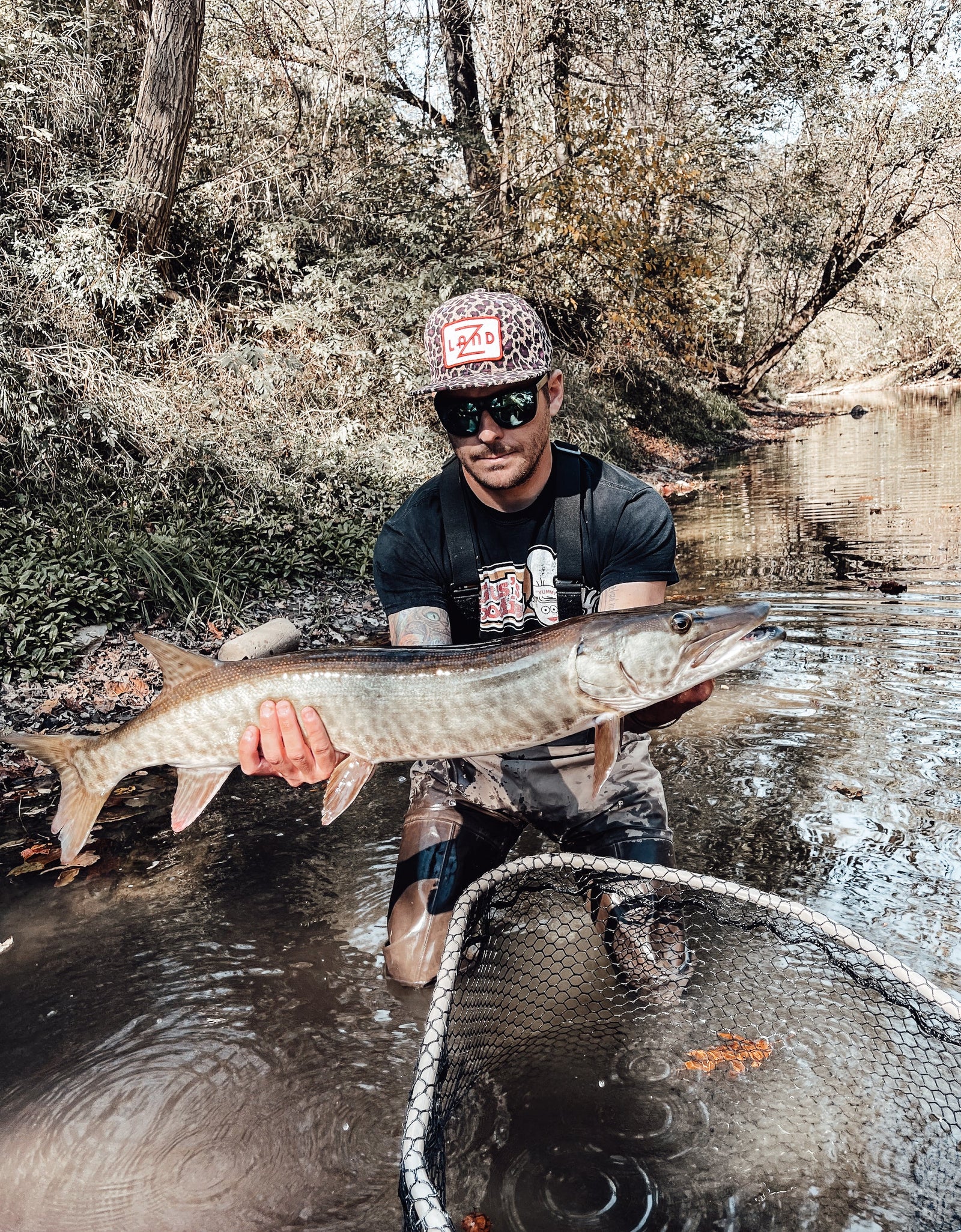
Musky: The best and worst fly fishing decision you’ll make. Author: Nathan Rees (BOOK A TRIP) They say musky may be the fish of 10,000 cast but what you also don’t hear is they can be the fish of 10,000 dollars! Only kidding of course. Just like with all fish species and hobbies you can dive as deep down the rabbit hole as you’d like. Musky fishing can be affordable and done on a budget or you can make it as complex and expensive as you’d like. Having chased these fish for 20 years I’d like to lay out a few things I’ve learned over the many seasons on the water searching for them. We will start off with the gear. 1. Rod and Reel: When diving into the sport look for a solid rod with a nice tip that can allow for a sturdy figure 8 ( a technique I will explain in a little while). Pair the rod with a reel that falls within your budget. In the many years fishing for these fish I have never once used my reel to land one. For the most part all they do is act as a line holder. 2. Line: look for a good intermediate sink or sink tip line in the 300-500 grain weight depending on the depth and current speed of the water you will be fishing. Shallower water go on the lighter end and deeper go a little heavier. 350-400 grain seems to be the sweet spot for most. I prefer a lighter line as they tend to give my flies the action I prefer. 3. Flies: fly selection can be situational/seasonal. That being said flies in my box range anywhere from 6” to 20+”. When starting out I always recommend a good single Buford style fly and a fly with some articulation. That happy medium for most of my flies falls in the 10-12” range. There are so many good fly tiers and patterns out there that it really is tough to go wrong. Just look for something with some buck tail, feathers, and flash and you should be golden. 4. Miscellaneous: I recommend a good solid net (look into our new Predator Series Catch Cam Nets), a nice set of long needle nose pliers, jaw spreaders, and Knipex bolt cutters for those times when the fish get hooked deep and that’s the only option for a safe release. Now that we got the basics of gear out of the way we can take a look at habitat/structure to target when you’re out on the water. Below are a few of the areas I tend to focus on in the rivers and lakes of Appalachia: • In lakes I will target standing timber, lay downs, rocky banks with chunk rock or boulders along them, weed beds, main lake points, deeper channels with access to shallow water, and depending on time of the year and forage base sometimes it pays off to follow the bait wether that’s shallow or deep (it varies seasonally) • In our rivers and streams I tend to focus on all forms of timber and lay downs wether it’s shallow or deep. We also like to target mid river humps and sand bars. However with that being said most river/stream fish seem to come from the outside bending bank where the most current and flow channelizes the water making it deeper and a great place for a musky to lay awaiting the opportunity to ambush. Finally I’d like to wrap up with a few tips and tricks I’ve learned over the years that have helped put some fish in the net. • Always figure 8 ( rod tip slightly in the water and make a 8 or infinity sign with the fly) after every cast or at the very minimum throw in a big half circle to see if you have something trialing the fly. • If you get a fish to “follow” changing depth from shallow too deep with your figure 8 can often help trigger a strike. • Roll casting your fly when it gets hung up and using the weight of your sink tip to get it unstuck is an invaluable tip. It has saved me blowing out structure and spots many of times and it has also resulted in some wild reaction strikes from fish. • Strip set don’t set with your rod. Strip set. Strip set. Strip set. Oh yeah and strip set. And if I didn’t mention it make sure you strip set when you get one to finally eat! • And last but not least keep some ibuprofen in the boat because double hauling big flies all day ain’t easy or for the faint of heart! Now if I haven’t scared you off. The rewards of landing a musky on the fly are well worth the effort. The stories, the pictures, the memories, and the time spent on the water with good people more than make up for the long days of only moving a fish or two. From everyone here at Natives Fly Shop we hope to see you all out there on the water chasing the fish of 10,000 casts and if you have any questions please don’t hesitate to ask us! We’d be more than willing to help out. If you want a chance at  catching a Musky on the fly without buying all the gear and a watercraft, then book a trip with us. We know where the Musky live!

Read more